
One Life ... Live It: Defender Trophy 2026 - Day One
The first day of the North American Defender Trophy Qualifying started bright and early on Thursday. We were told that we had to meet in the lobby of the hotel in Vancouver at 7am to get loaded onto a bus that would take us into the mountains above the city. Since we’d be on the road for around two hours and were told we’d hit the ground running as soon as we got to the site, that meant the smart players were going to grab breakfast at the crack of dawn. Shaun and I met at the Denny’s connected to the hotel at 5:45am We munched on bacon and eggs and chatted with a Canadian competitor named Kyle Smith who had the same early morning breaky plans we had.
With breakfast complete, I grabbed my bag and headed to the lobby. When I got there, it was already full of “adventure-y” looking people and in a corner was a Defender Trophy representative handing out our badges.
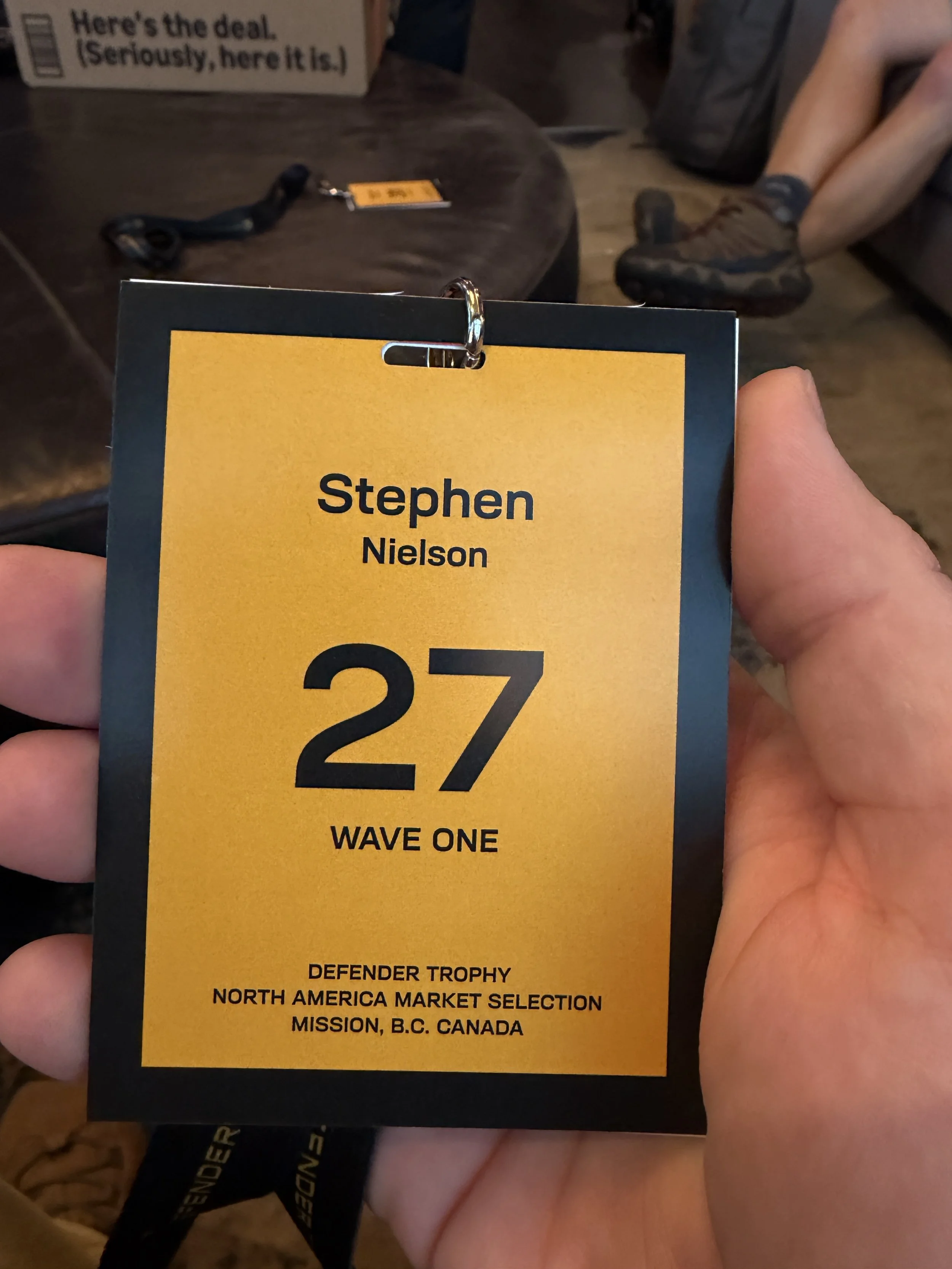
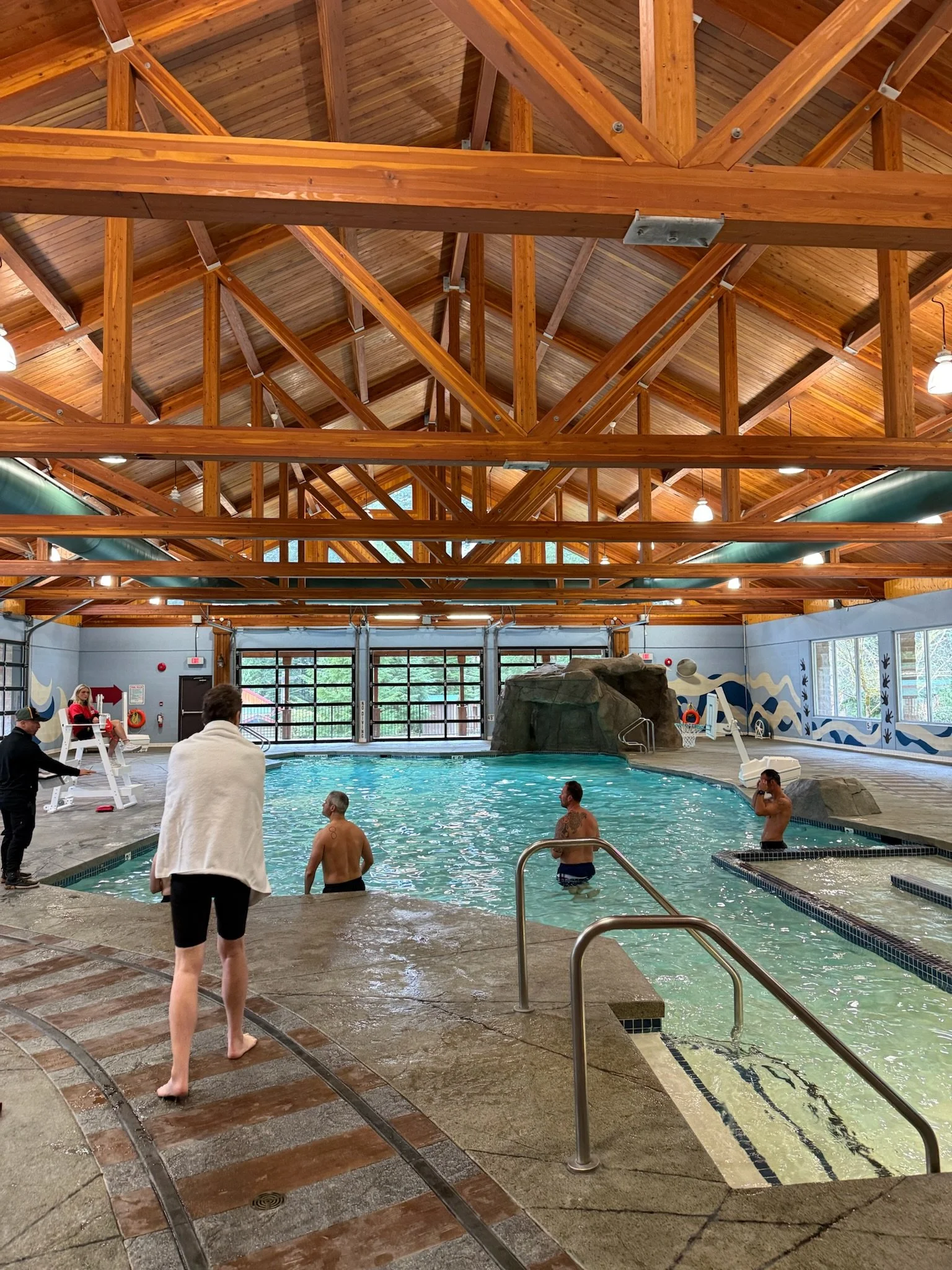
All the competitors were milling about, introducing themselves, and figuring out what groups we were in. I was in Group E and quickly found a few other members. From our schedule, we were teed up to swim first. Since the competition site, Zajac Ranch, was on the shores of Stave Lake, the debate was if we were going to be forced to get into the freezing water. Considering the heritage of Camel Trophy, I didn’t rule it out!
At 7:30 we threw our bags on the bus and climbed aboard. During our two-hour drive into the mountains the bus buzzed with conversation. Everyone was excited and speculating what would be greeting us at the site. When we pulled through the gates of Zajac Ranch, we saw rows of Defender Trophy Edition’s and lots of Sandglow yellow signage.
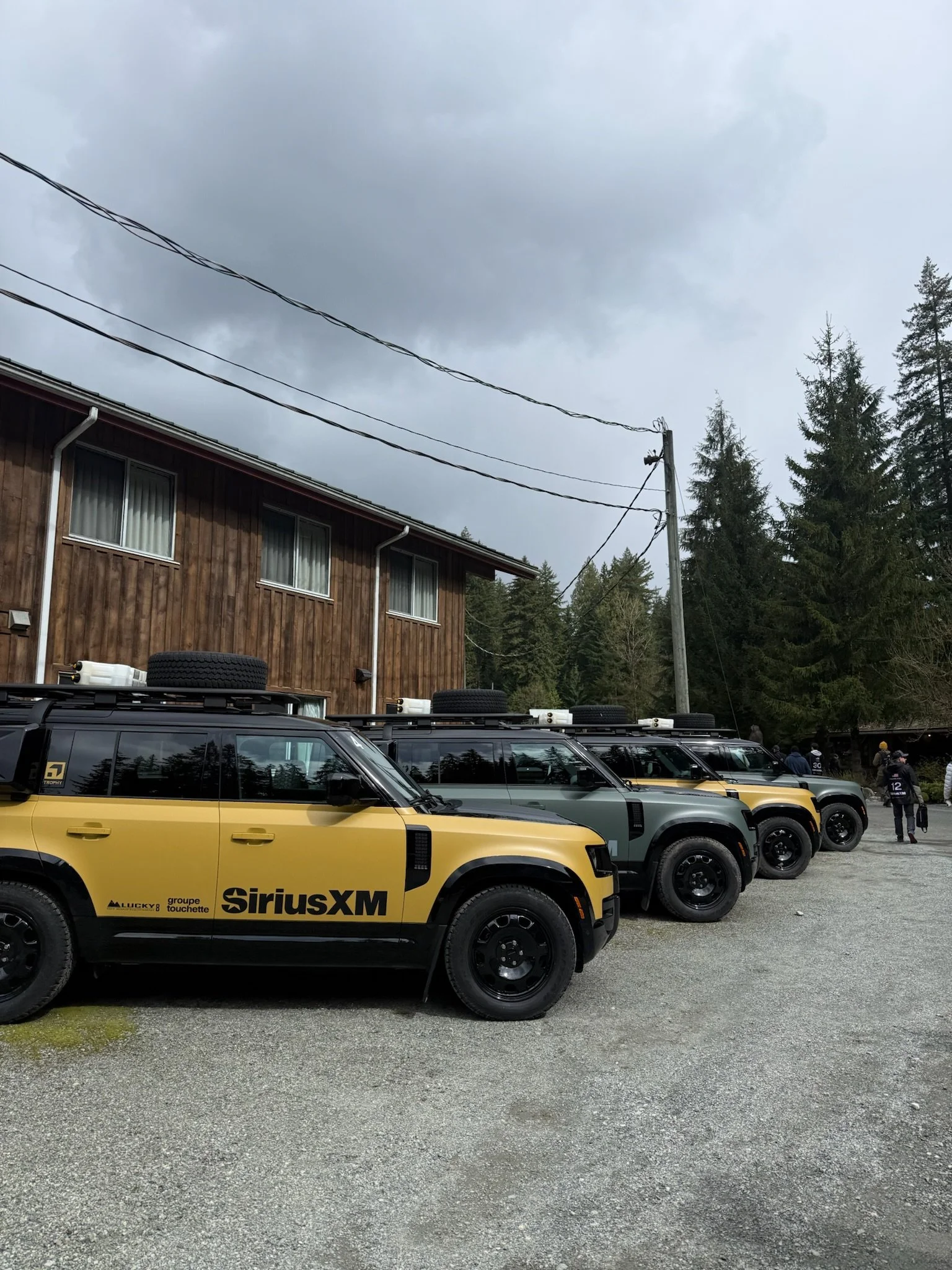
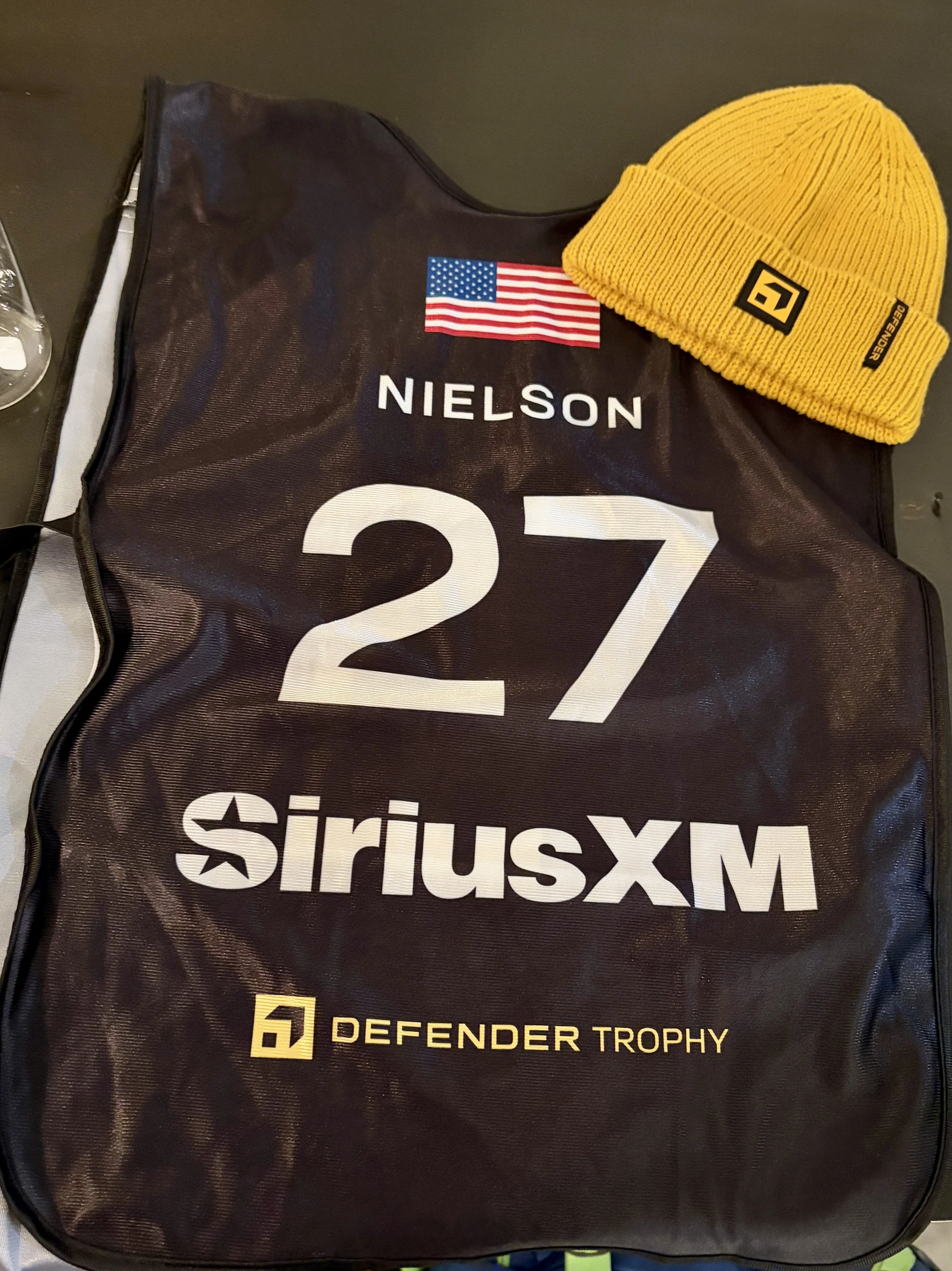
We disembarked and lugged our gear into a reception center where we checked in and were issued our kit:
Competition bib with name and number on it
Defender Trophy beanie
Defender Trophy shell jacket
Defender Trophy Yeti mug
Defender Trophy water bottle
A Pelican 10L dry bag
Folding spork
Cheap work gloves
We were told to put whatever we thought we might need for the day in our dry bags and that our luggage would be transported to the camp for the night. So, I dutifully stuffed my navigation gear (compass, protractor, area topo map, calculator), gym shoes, swimsuit and towel into the bag. Then I threw on my down vest and new shell jacket before we headed to the amphitheater for our orientation.
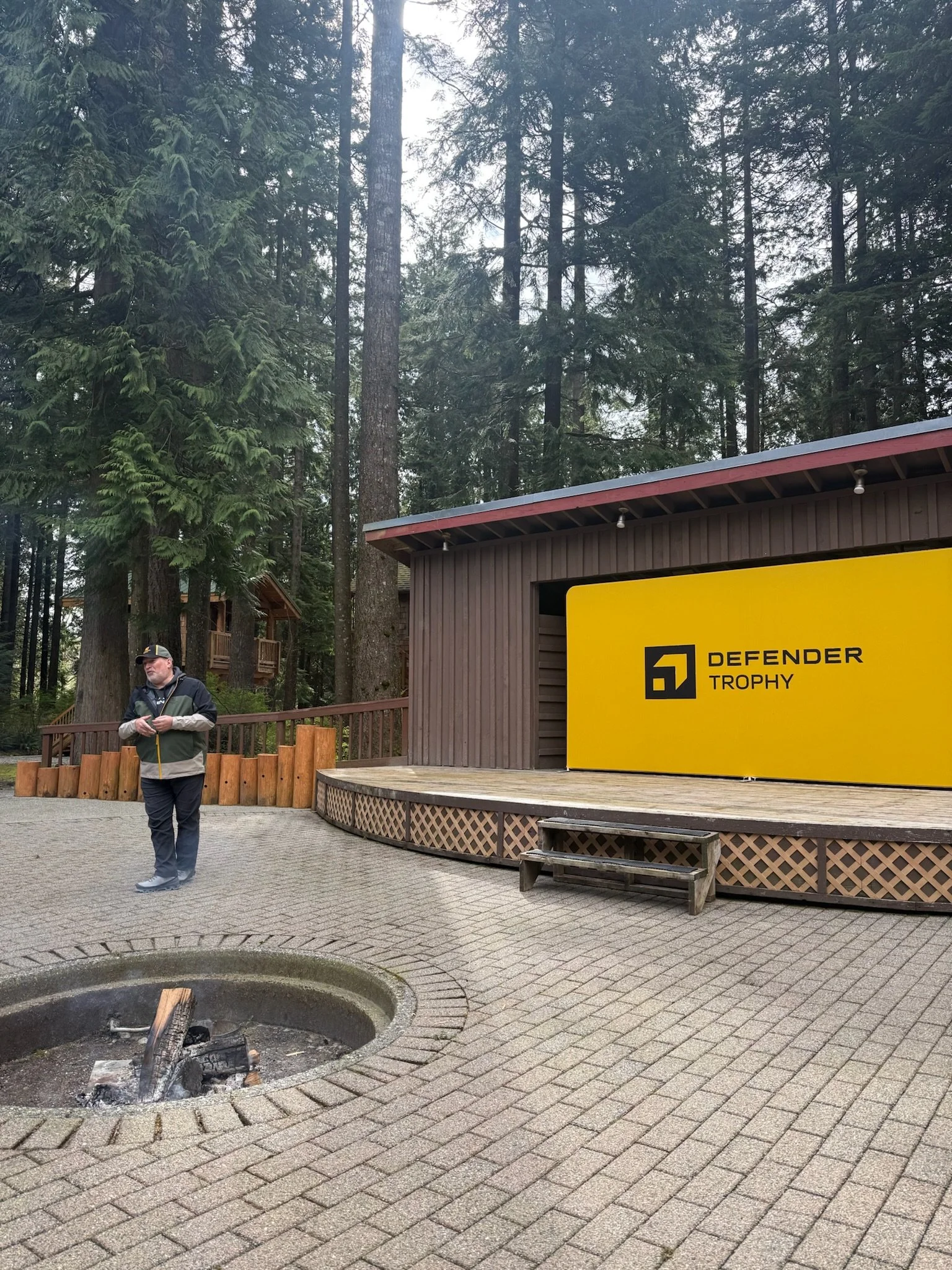
Orientation was about what you might expect. Joe Eberhardt, the president of Jaguar Land Rover North America, got up and gave a speech about the "indomitable spirit or Defender” and how we will “define our impossible”. So pretty stock standard corporate speak stuff. Then we had a couple other people talk about how Defender Trophy came to be, its lineage to Camel Trophy, the partnership with Tusk and focus on conservation.
Finally a gentleman named Ken got on stage and talked about what we were to expect over the next two days. He said that the tasks were designed to test us both physically and mentally and it would be hard, but that he hoped we would have fun. And with that we broke for lunch.
After a somewhat disappointing boxed chicken wrap for lunch, we regrouped in front of the check-in building for some vehicle familiarization, a quick overview of the knots we’d be expected to use throughout the event, and a final task briefing. The vehicle familiarization was pretty straight forward, just a chance for anyone who hadn’t driven a L663 before to hop in one, go over the controls, and ask questions. The knots, well, we tied clove hitches, lashes and bowlines being told we “will” be using them later. Noted.
Then came the task briefing. It was pretty simple, each group of eight would be chaperoned from task to task by a “brand ambassador”. At each task there would be a placard giving us the rules, penalties, and time we had to complete each task. We’d be given a few minutes to read that, then the task would begin. Once the task was complete, we’d have 15 minutes to transition to the next task. And with that, we were off.
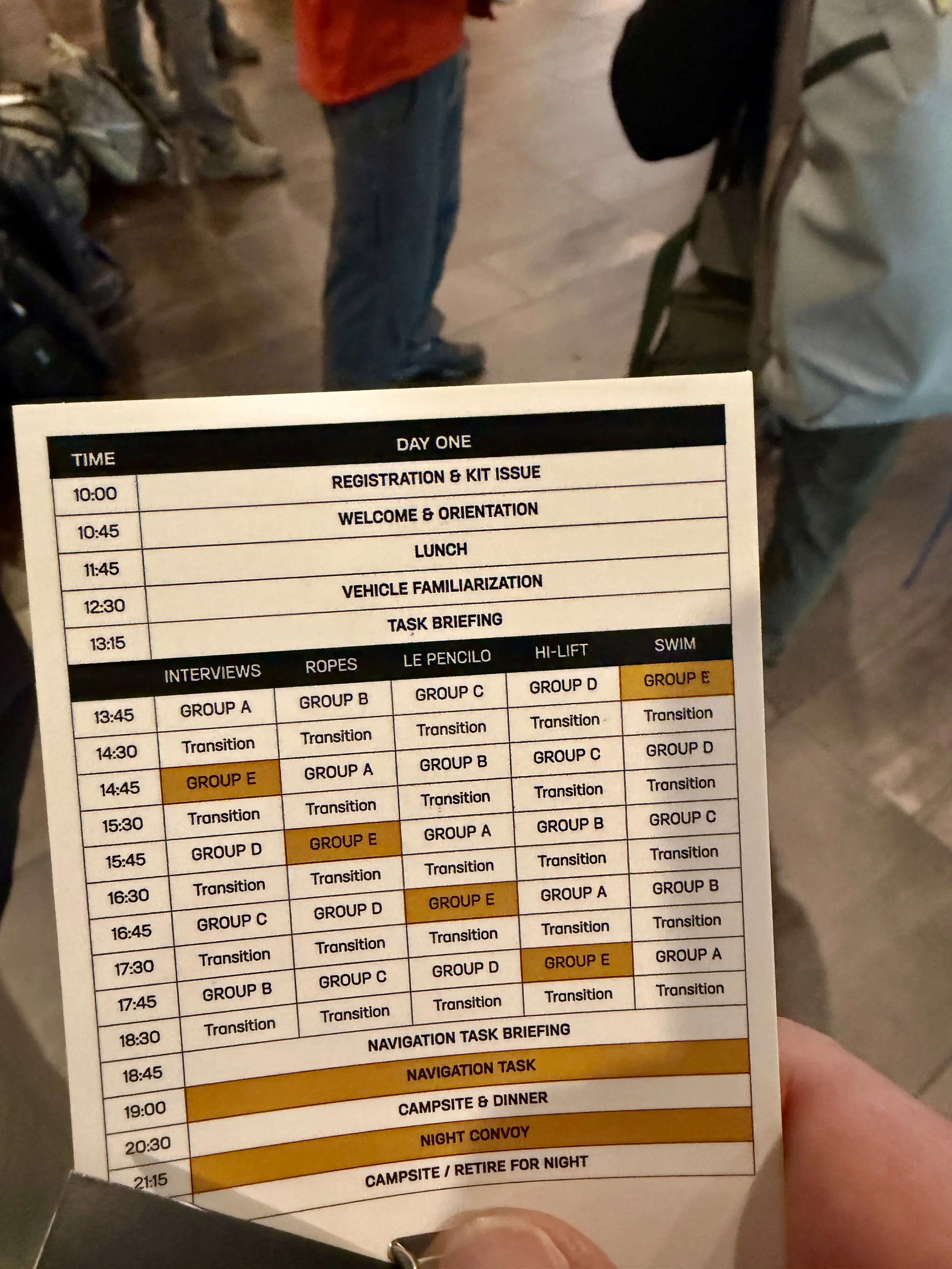
Group E’s first task was Swimming. Much had been speculated about what this task would entail. Would we be jumping in a glacially fed lake? Would we have to recover a wheel from the bottom of a pond? Would we have to swim a winch cable across a river? We soon found out that the answer was… we’d have to swim 50 meters in a pool designed for kids.
Well, not exactly. This is also where we learned that what's not in the rules is equally as important as what's in the rules. The specific goal was, ‘You must swim 50 meters within 10 minutes.’ So we asked the scrutineer, “Do we get out when we complete 50 meters, or do we keep swimming for 10 minutes?” His answer was a very coy, “I dunno, what do you think you should do?”
You see, you got points for each task. Some tasks were individual, and some were team based. But beyond the points for tasks, you were also being constantly evaluated for how “mission fit” you were. Loosely defined that means: how far are you willing to push yourself? What kind of team player are you? How upbeat are you? Generally, how well will you represent Defender as a brand? So, if the rules say you can quit early or you can push for 10 minutes, you push for 10 minutes and try to help others do that too.
So I got in the pool with three other guys and took off at the whistle. It was three laps in this kiddie pool to cover 50 meters, which I covered in about a minute. And I kept pushing, swimming hard until about five minutes when I thought, “Why am I trying to burn myself out now?” and I switched to a leisurely back stroke and cherry picking for the last five.
Our next “task” was an interview. Not much to say about that, we had to sit down on camera and talk about what drives us and why we are at Defender Trophy. This is a marketing exercise, so I’m guessing you might see my ugly mug in the final cut of “Reality TV: Defender Trophy 2026”.
But after the interviews we had the time to walk down to Stave Lake and watch a helitack Huey practice scooping and dumping a water bucket, which was kinda cool.
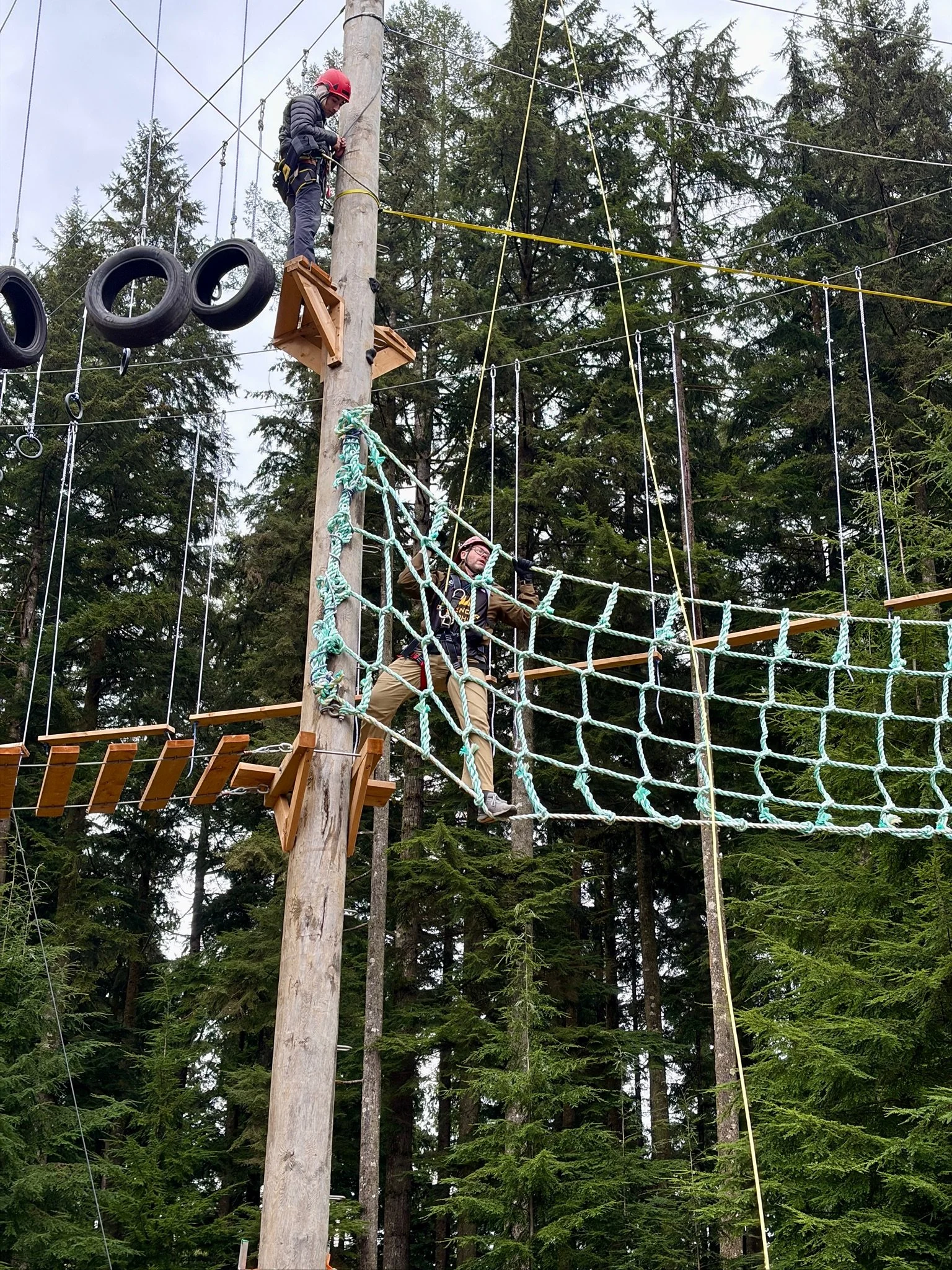
Our third task was the Ropes Course. Each of us had to make it through four sections made up of webbing, a slack line, tires, and a wire crossing to ring a bell at the end within 5 minutes. The order was selected randomly and I was last, so I watched and cheered on my teammates from the sidelines. Some did better than others, but everyone tried as hard as they could. Finally it was my turn and after getting fitted into the harness, I scaled the first pole to the webbing. The key to this section I learned from watching the others was leaning forward and stepping as wide as I could. After that you climbed to the top of the next pole and shimmed across the slack line while holding onto a wire above your head. Not too bad as long as you kept your stance wide. Then it was onto the tires. Our most successful team member, Pierce, had stood on top of the tires to make it across, so I figured that was the winning strategy. It was not. The second tire I stepped on spun and down I went. Oh well, I had made pretty good time up to that point.
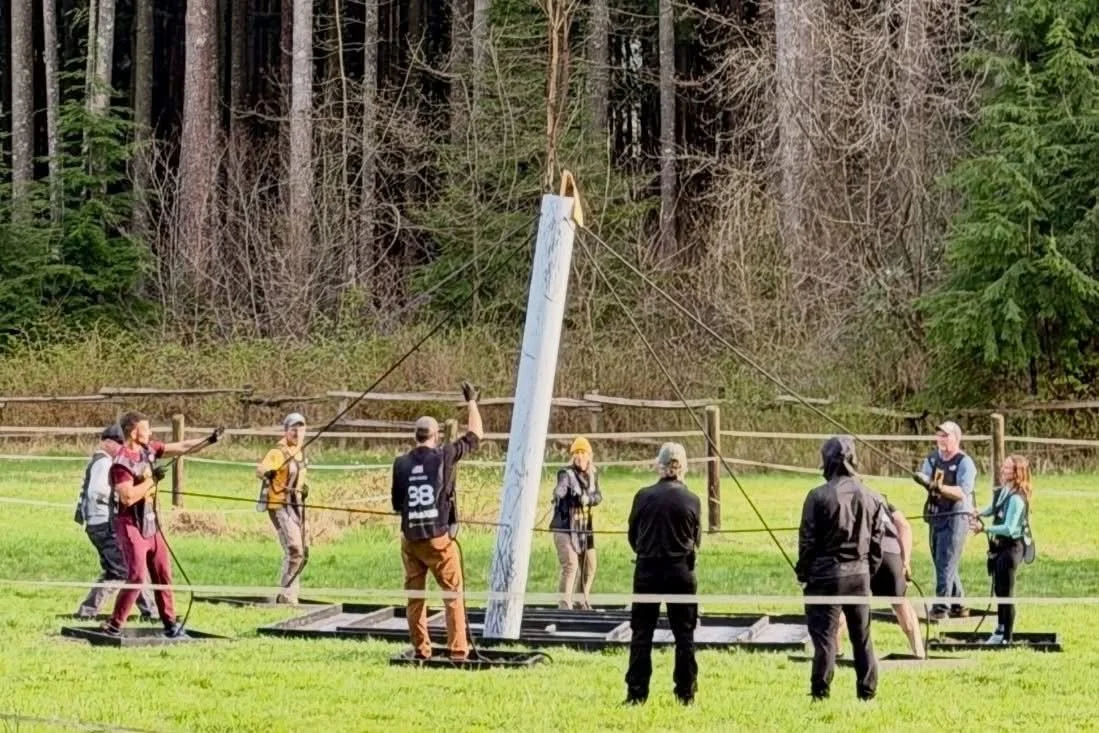
From this we moved onto “Le Pencilo”. None of us had a clue what this was, so it was a genuine surprise when we arrived at the task to find that it was heavy a 12’x18” PVC pipe with eight ropes attached to it, four on the top and four in the middle. Each of us had to stand in a 3’x3’ box holding a rope, pull the pipe into a standing position, then work as a team to drag it through a wooden maze as many times as possible in 20 minutes. This task was all about communication, team work, and grip strength. And we killed it. We figured out the mess of ropes immediately, got the pipe on its end, and worked seamlessly to pull it through the maze without a hitch. It was a surprisingly fun task, and since we did it so well, everyone was super pumped afterwards.
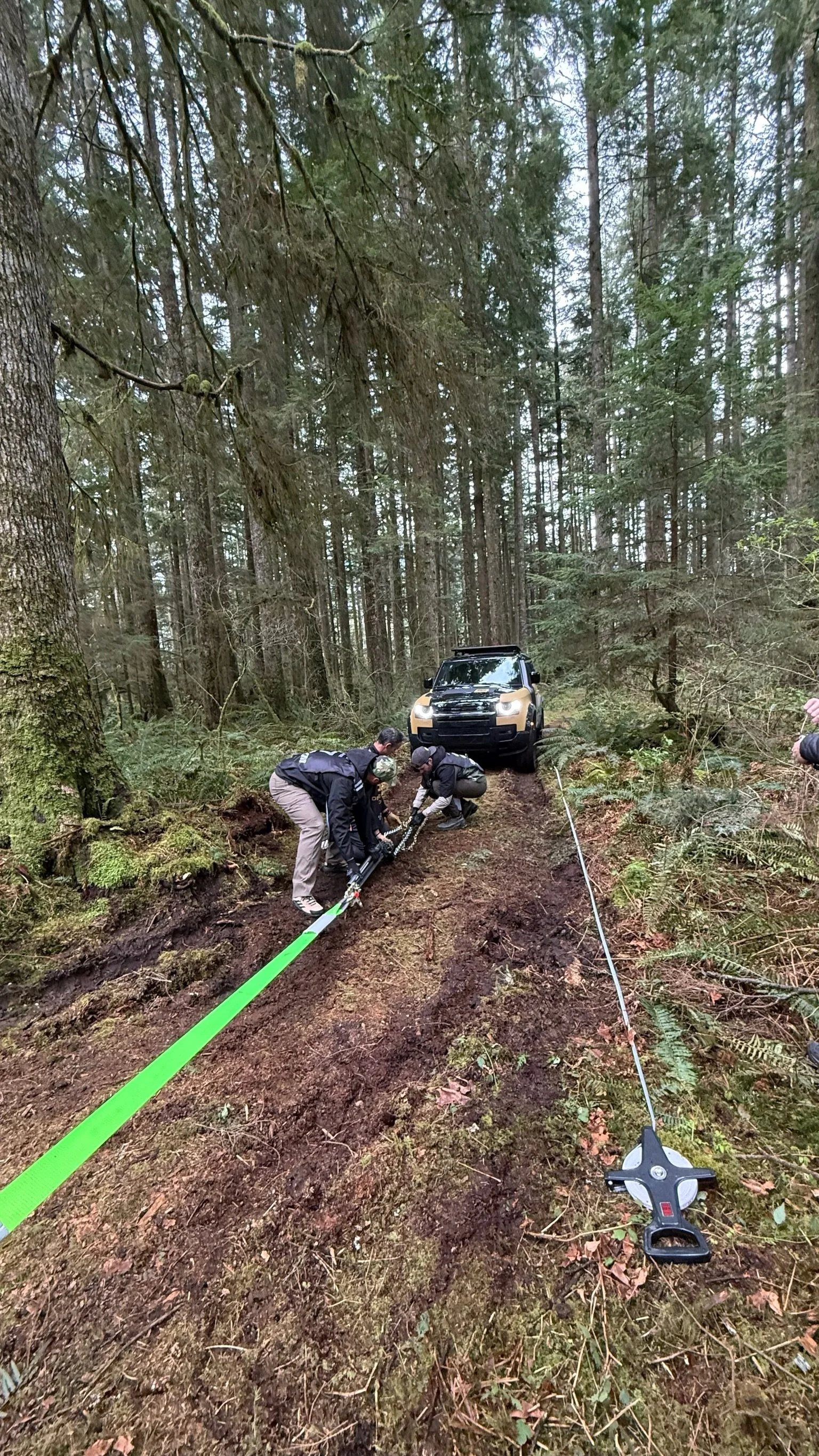
Our final task as Group E was the Hi-Lift. I was looking forward to this since I’d worked with Joel at Legacy Off-Road Recovery Training on what he called “Hi-Lift Cross Fit” going through all the elements of what the tool can do, but specifically using it for manual winching. So I was ready!
Unfortunately it was a bit of a disappointment. We did have to use a Hi-Lift to move a vehicle as far forward as possible in 15 minutes, but I thought we’d have to pull the jack off the roof rack, attach the straps to the vehicle and the tree, and set up the Hi-Lift with its jacking kit. Instead, everything was set up and we just had to transition the chains each time we needed to reset the runner. We did a great job and got the car about as far as you could realistically go in the time limit, but for a task I’d actually worked really hard at training for, I was kinda sad it wasn’t more challenging.
After we completed the Hi-Lift, all 40 competitors were gathered on the edge of the forest, broken into four groups of ten, and assigned a color; red, yellow, green, and pink. This would be our orienteering task. Each group was given a compass bearing and a distance in meters to our first marker. That marker would then give us information to the next one, and so forth. There were five markers, each one had a number on the back and those five numbers would get us our dinner. Crucially, the scrutineer told us that if we had a compass that you could set magnetic declination with, we needed to zero that out as we “wouldn’t need to worry about that”. Uh huh.
I was in the pink group. Myself along with a fellow Group E’r, Brock, volunteered to navigate while two guys named Charlie and Patrick managed the pacing to the next destination. We set off bushwhacking and found our first two markers with ease. Then, we got… not lost but lets say ‘off course’. We had 40 minutes to find all five markers, and we spent 30 of them looking for the third. We did eventually find the third marker with literal seconds to spare. After that our scrutineer led us out to the road, where he subsequently got lost as well for a bit!
Upon reflection, I think I figured out what happened. At the start, they told us to not worry about declination, meaning we’d be navigating via true north not magnetic north. But the second marker told us to follow 225* [magnetic]. We didn’t register that at the time and kept using true north.
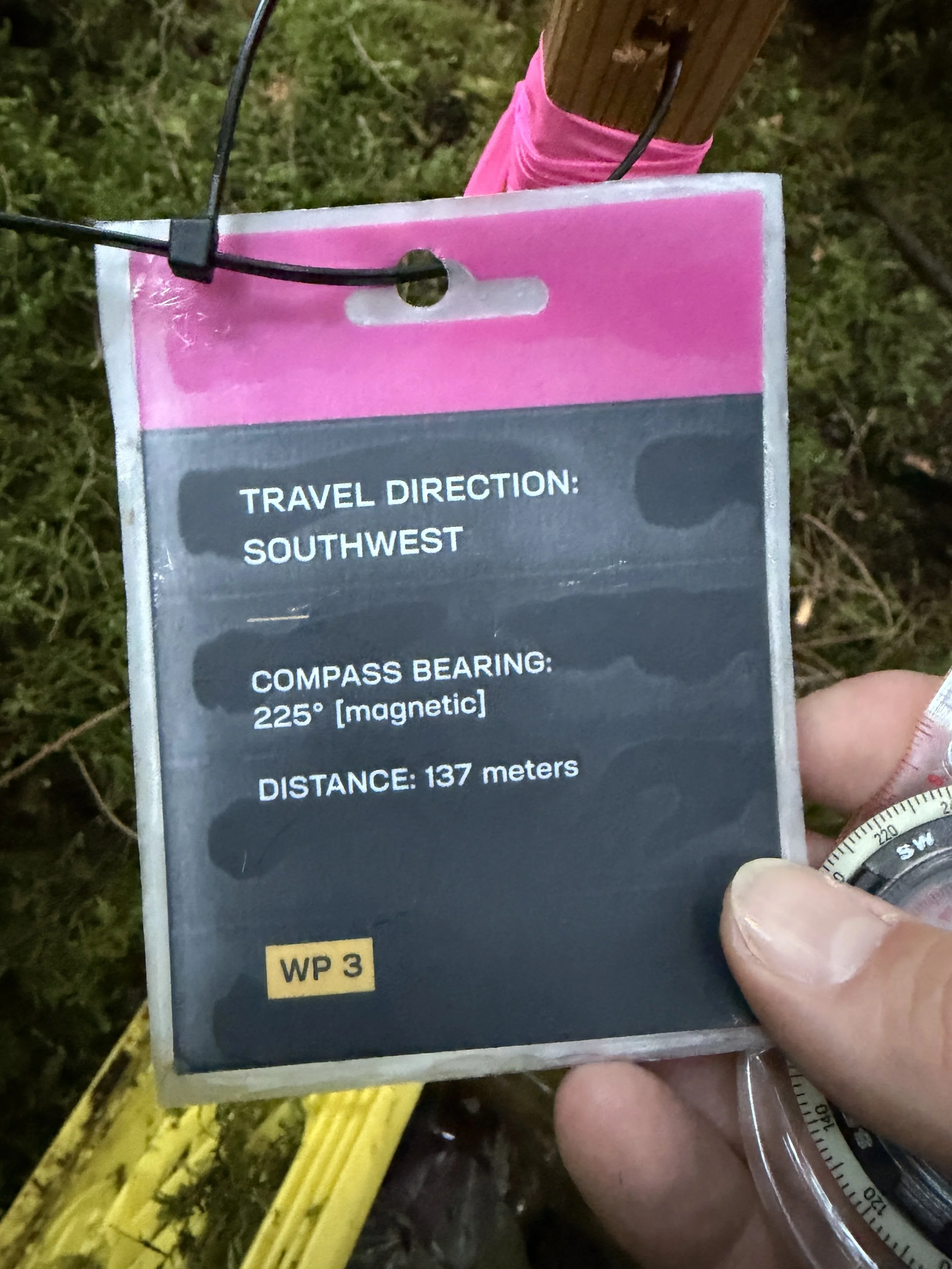
Had I set the declination on my compass to 15.3* west, I think we would have found the next marker because when we finally did, it was west of the track we’d been beating. Oh well. We did find a pile of trash that’d clearly been there for years and packed that out, so that made me feel good. But I did wonder if I’d be eating moss for dinner.
Once our scrutineer sorted out where he was, he took us to a fork in the road where there were two Defenders parked, a very jovial looking president of JLR North America, and a stack of 9.5L RotoPacks of water. The people there told us we had to grab a RotoPack and head down the road where we’d pass two Defender Trophy signs and then we’d make camp. Our time started now, go as fast as you can.
Now, I'd been training hauling 5-gallon Scepter cans around my back yard. I’d been running on the treadmill at the gym. And I’d been rucking through my neighborhood. What I had not been doing was running in heavy waterproof hiking boots, wearing a jacket and dry bag while carrying 21lbs of water. I made it about half a mile running before I ran out of steam. Others who were clearly in better shape than I took off and kept going. I decided that a brisk walk on the flats and uphill, then trotting downhill was the winning strategy for me. Which was smart, because it ended up being three kilometers to camp and I was a sweaty mess when I got there.
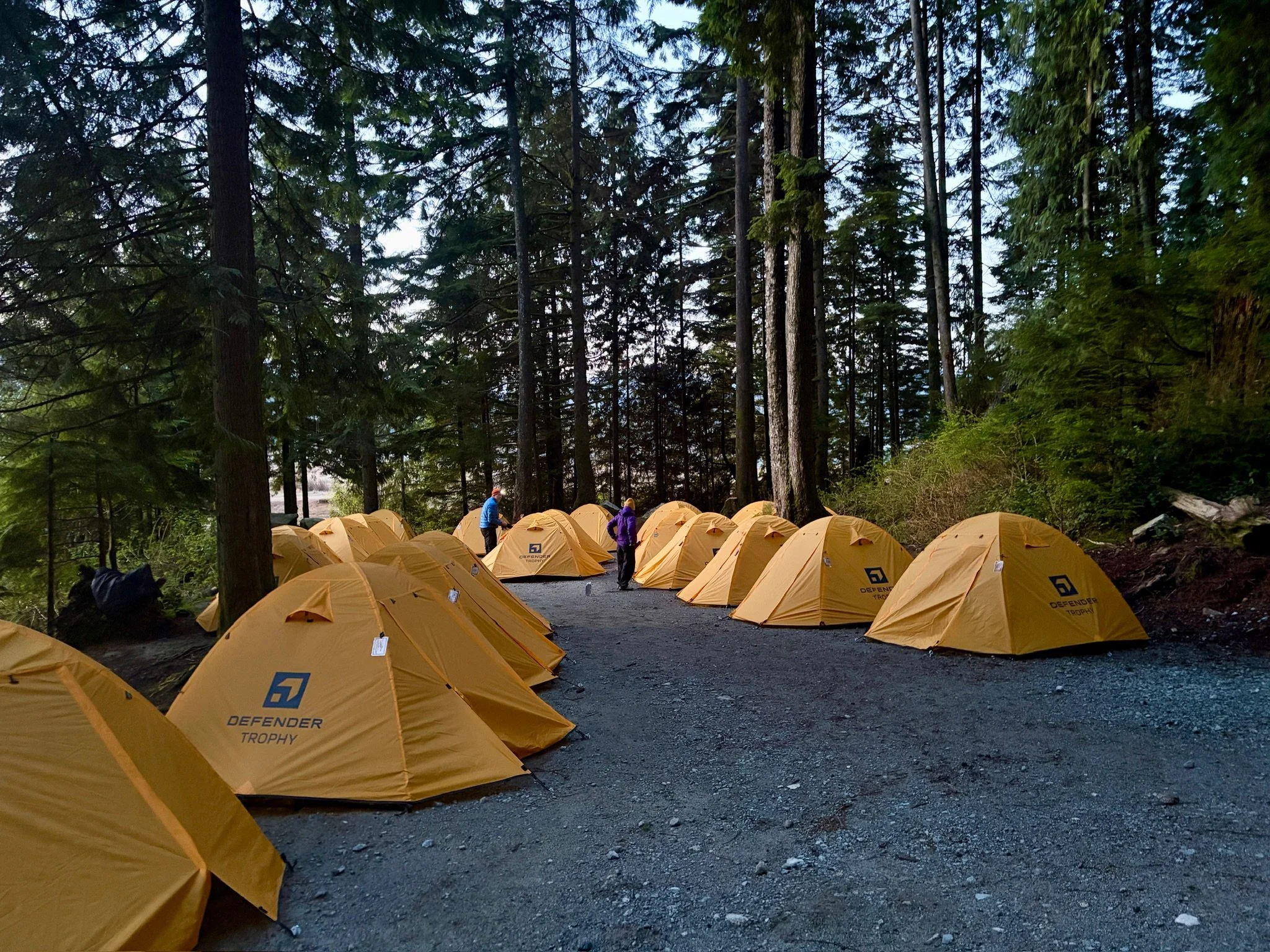
At camp we were assigned our tents, and given some time to unwind. Which was a great opportunity to share notes with everyone and see how people were feeling about the day. One of the best things that has stood out about the whole Defender Trophy experience is just how down to earth and cool the people were. There wasn't a big personality or ego out of the 40 people there. Everyone was super chill and just there to have a good time and be part of the team. Truly the "Camel Spirit" was still alive and well.
Our navigation task that was supposed to yield a code for dinner was a combination to a set of locks on coolers. It turns out that none of the four teams completed the navigation task correctly! So either that means we all sucked with compasses, or there might have been an issue with how the courses were laid out. Who knows. But since no one had the combinations, the organizers had to give them to us so we didn’t starve!
Dinner was gourmet dehydrated camp meals. I picked the buttered chicken over the pasta pesto, and I think that was the right choice. I’ve never minded these things, they aren’t steak and potatoes, but they also aren’t top ramen. And they provided sustenance, which after the day we’d had was needed!
After dinner was a night convoy. There were ten Defenders, so four people hopped in each one and we headed up the mountain into the dark. After a ways on the main forest road we turned onto a legitimate 4WD trail. We were advised to put the vehicle into Rock Crawl mode and low range. The first part of the trail I got to drive was a fairly steep climb on loose, wet rocks. Now, everyone has their own thresholds for this sort of stuff, and growing up on the trails of Moab, this wasn’t much of a challenging trail. But, it did offer an opportunity to actually drive the Defender on a real trail for the first time. And it did great. The Terrain Response system anticipates wheel spin and did a fantastic job keeping traction and the hill descent control, while kinda creepy, works as advertised!
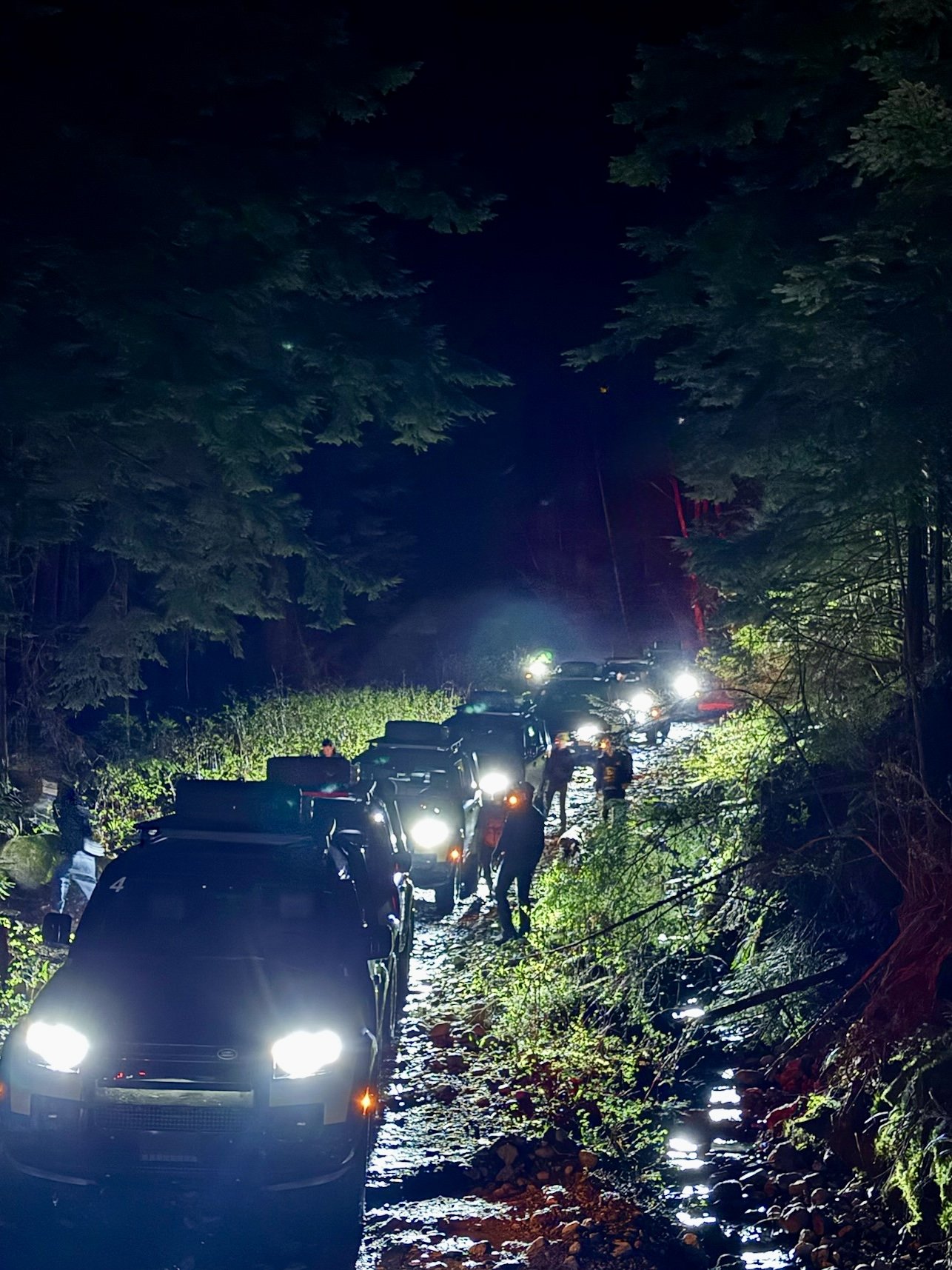
As we looped back around and headed down towards the main road, the leader came on the radio and told us we needed to stop because “someone needed help”. We all piled out of our cars expecting a night time vehicle recovery. What we found was a Defender on a sideroad blocked by a big log. A tree strap had already been affixed to the log and rope had already been run to two pulley blocks in the trees. One of the organizers asked for volunteers to grab the rope to help pull the log out of the way. And that was it, just a demonstration of force multiplication, which was kinda too bad as I’d really hoped we’d get to do a real recovery. But perhaps this was a indicator of something we'd face on Day 2?
We all hiked back up to our vehicles and headed back to camp. We were told we could hang out by the campfire for a while, but with breakfast at 6am the next morning, most of us just hit the sack.